





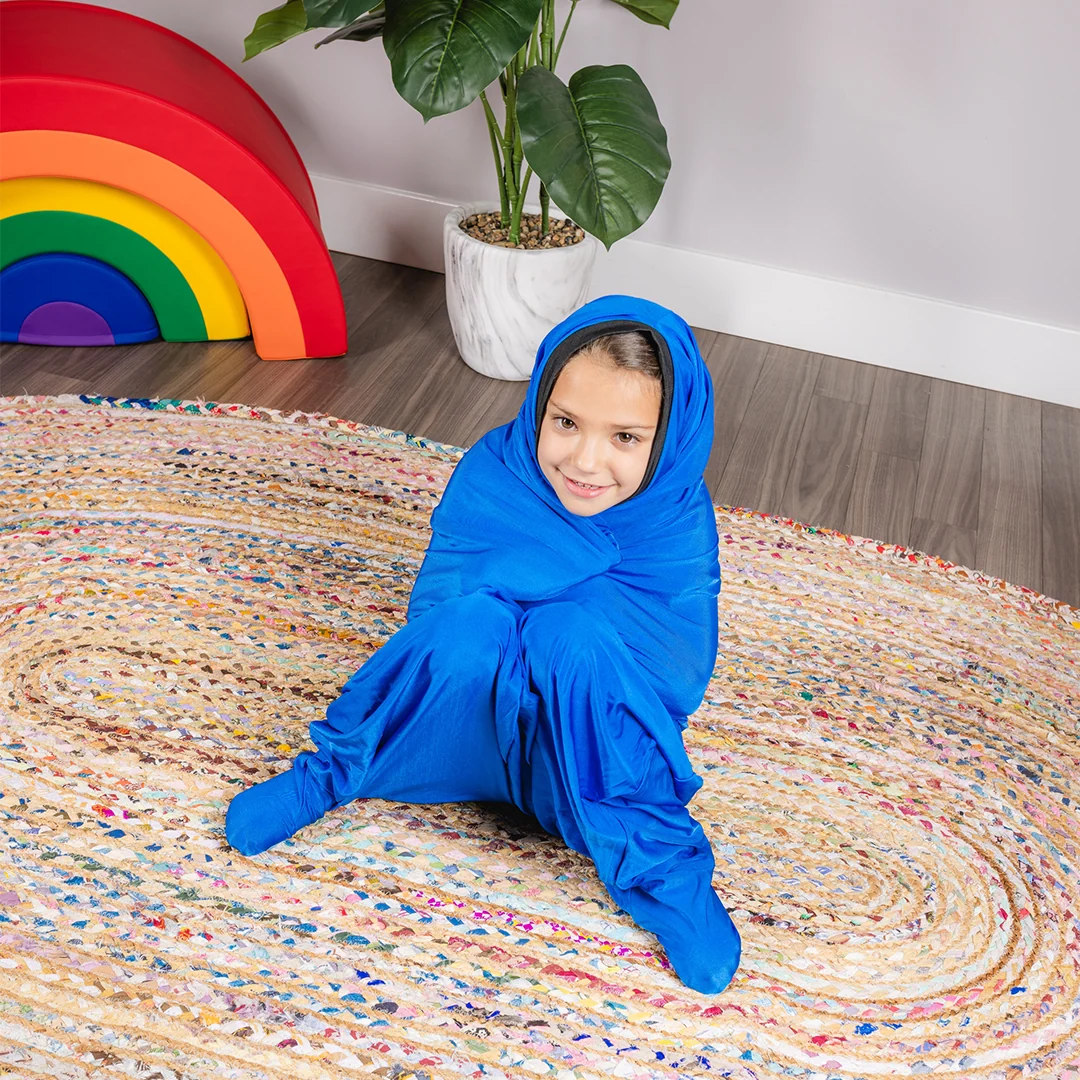
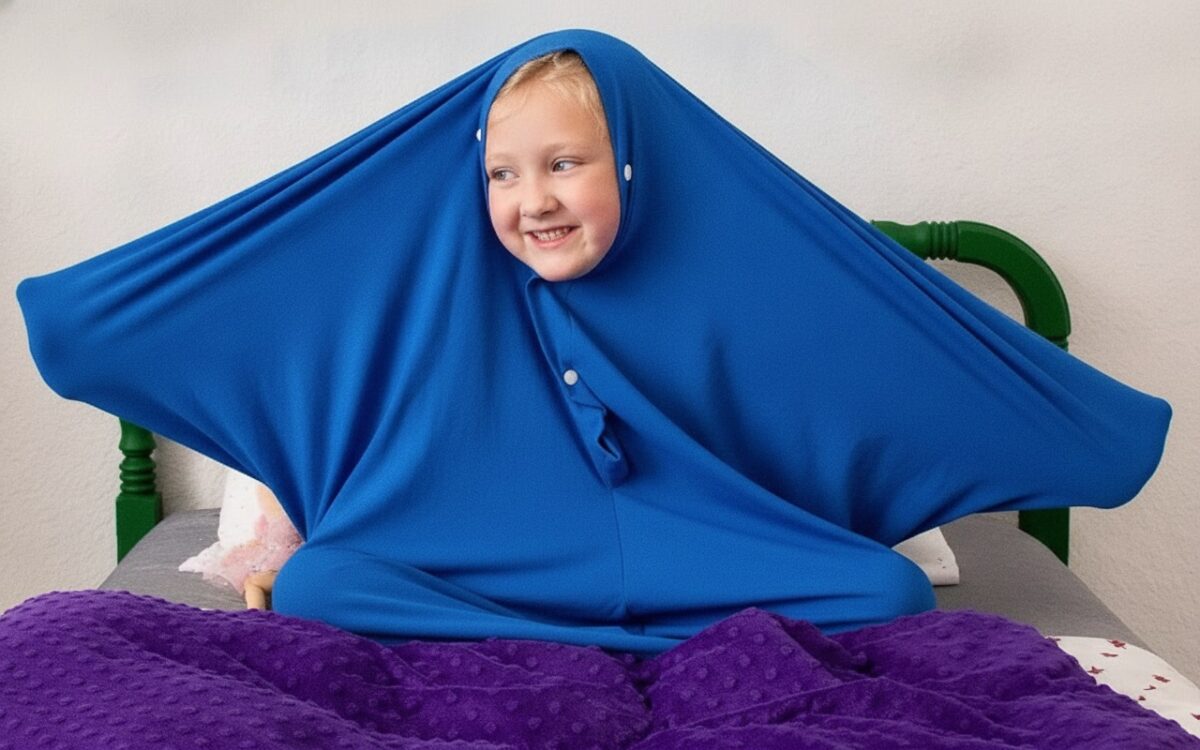
A body sock is a full-body fabric sack that provides deep-pressure stimulation and moves with the user allowing them to be aware of their body throughout. Proprioception is the awareness of body position and movement and is generally provided by the muscles and joints.
Body socks may be beneficial to use in the home or during therapy. Offering a body sock does not guarantee it will be used. It should be offered along with other options. Body socks may provide movement and pressure inputs which may improve self-regulation and focus for individuals with sensory processing disorders. It should be noted that body socks and other sensory inputs do not provide a solution or therapy for the condition.
Body Sock Sensory Inputs
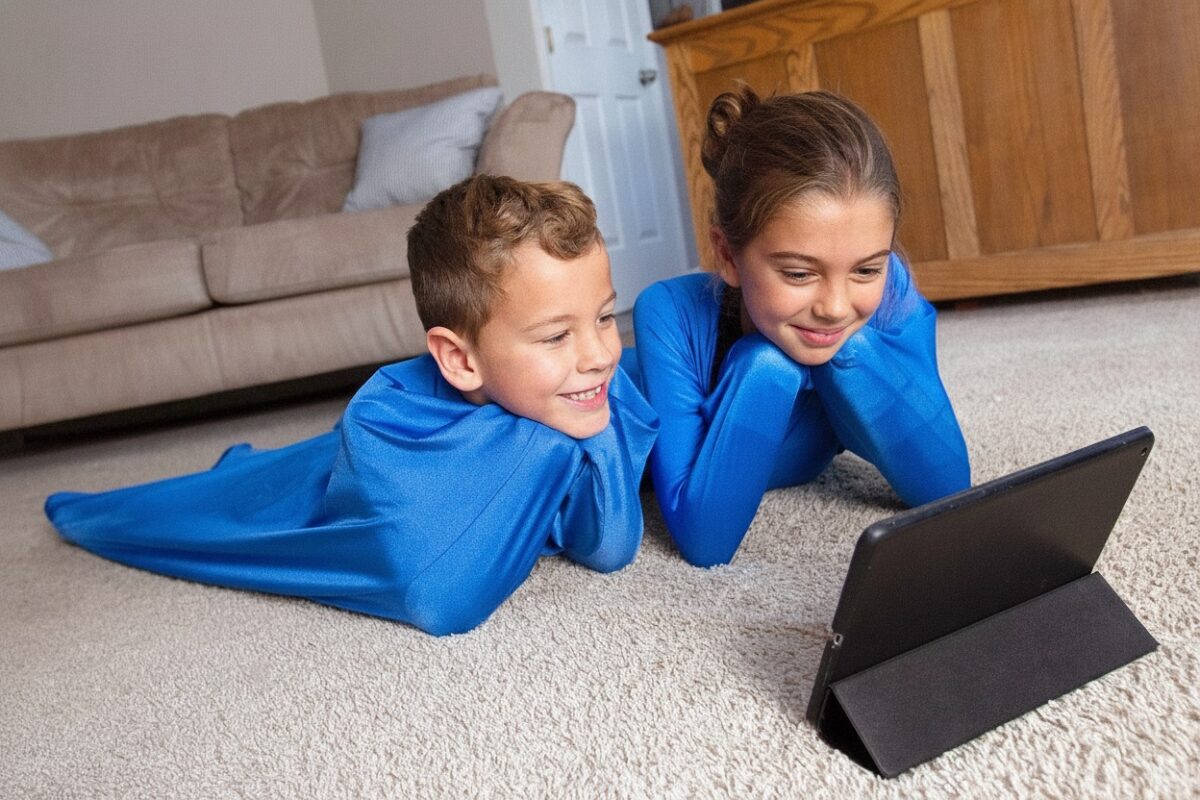
Body socks provide resistance when the individual pushes out against the fabric. This takes physical effort and provides proprioceptive input to the user.
Body socks are a type of deep pressure garment. The fabric used to create these garments is a blend of spandex and nylon. The fabric creates resistance often described as “heavy work.” The amount of resistance changes based on how the fabric is stretched.
Proprioceptive Input from body socks
Proprioception is the awareness of the body’s position and movement. This type of input can be gathered from fabric in a body sock. When fabric is pushed against it provides information about an individual’s effort and position. Feedback about the body can be useful during an activity. What provides organizing input for one person may cause overstimulation for another. Therefore activities should be determined based on the person’s experience and preferences.
The body socks do not supply vestibular input. Movement and activity provides this type of input.
Vestibular Input
Body socks allow a person to incorporate movement and activity into their day. These activities may enhance a person’s body awareness and organization. However this may not be the case for all persons wearing these body socks. If a person is not used to the fabric of the body socks activities involving the fabric should be limited to avoid discomfort or distortion.
What is a Body Sock and How is it Used?
Body socks are a type of movement activity that kids and teens can use on their own if provided with the opportunity. Body socks can be used during occupational therapy at school or at home. They can be provided as sensory play or as a structured activity. Kids on the autism spectrum and those with ADHD may benefit from the use of body socks though it varies on a case to case basis.
There is no specific age that determines when a child is ready to use body socks. It is important to consider a child’s interest in using the body sock and if they have the ability to use it properly.
Body Sock Activities for the Home
Below are various activities children can do while wearing a body sock.
Touch the stars. (Pretend to be a star and reach your arms and legs out as far as they can go.)
Alternate reach. (Reach one arm out as far as it can go and then switch to the other arm.)
Squats. (Bend at the knees as far as you can and stand back up.)
Crawl. (Get on the floor and move on your hands and knees as far as you can in the direction that you want to go.)
Activities in Other Locations
Body socks can also be used during occupational therapy sessions and classroom breaks. The activity can be modified to best fit the child.
- Setting
- Example Activity
- Possible Goal
- Adult’s Responsibility
- Home Activity
- Variations
- Body Awareness
- Alternate choices
- Occupational Therapy Session
- Stretching Activity
- Motor Planning
- Flexibility
- Activity Break
- Support Plan
- Activity Choice
- Support Plan
- Body Socks
- Adjust as Needed
- Treatment Break
Sensory Body and Compression Socks
These products are designed for low impact movement. Body socks do provide feedback through resistance. Resistance can be adjusted according to individual preference. Use of these body socks is optional and should not be incorporated into adult sensory routines.
Support for Adults
Sensory adult socks can be used during movement breaks directed activities or as part of an adult’s daily routine. For example an adult can raise their arm and leg and take up a stretch while noticing how their arm or leg extends. Sensory adult socks are a tool to assist an adult in noticing body movement. Adults should not use the sock to extend their abilities beyond their limitations.
Differences from Compression Garments
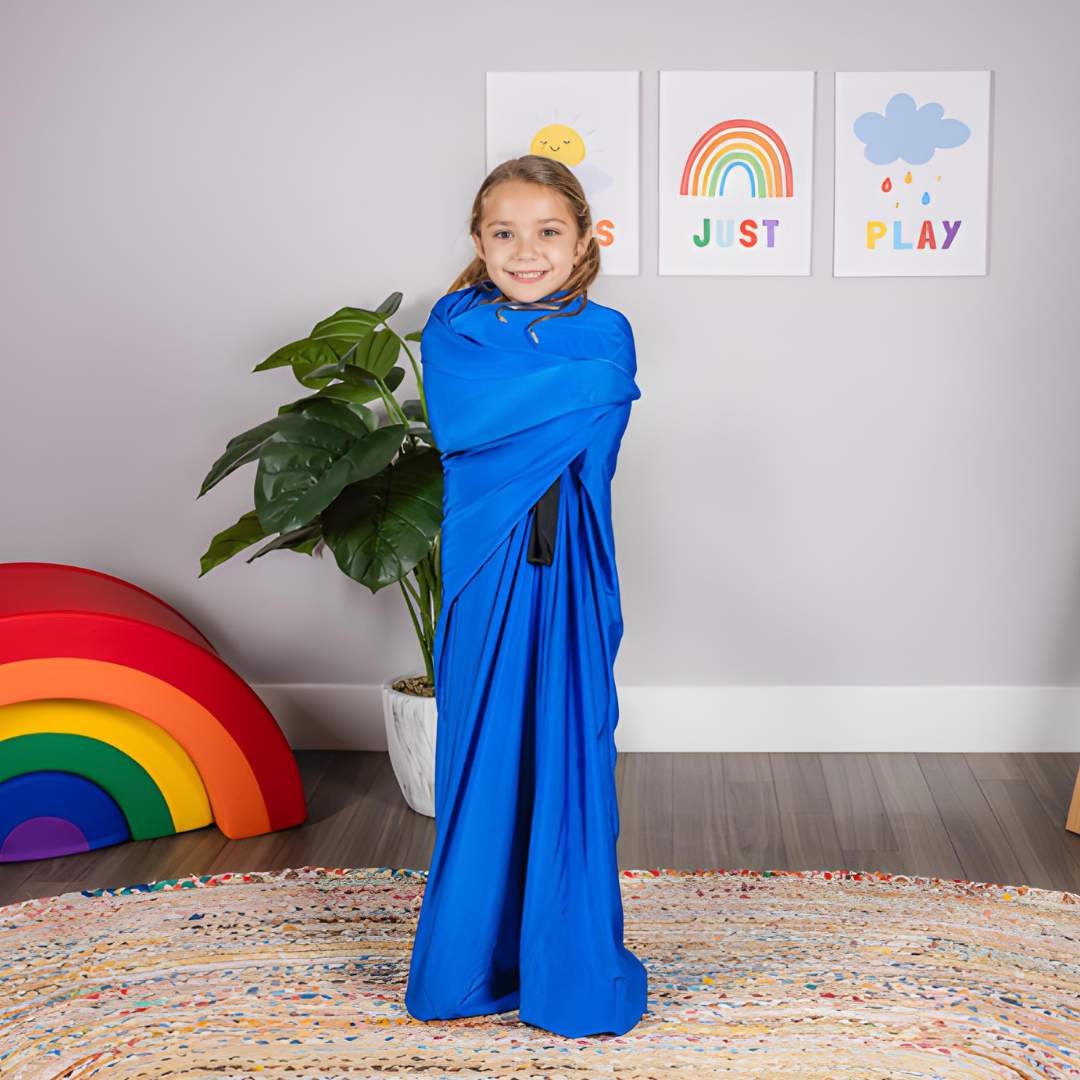
A body sock is a garment similar to a full body stocking. When pressure is applied to a body sock it offers resistance. Compression garments also offer a bodysuit design however they do not require movement against the fabric in order to provide a sensory input.
- Comparison
- Body Sock
- Compression Garment
- Pressure
- Resistance increases with movement and/or a stretch
- Constant pressure
- Movement
- Active movement against fabric
- Passive input
- Coverage
- Full body
- Varies
A body sock regardless of its label should not be used to replace another form of sensory input. If an adult does not prefer to use a body sock it should not be assumed that a different more appropriate input does not exist.
Choosing Appropriate Size and Fabric
The adult should measure from their shoulder to their foot. Using this measurement the adult can determine which body sock would best fit based on the size chart. Body socks should not be chosen based on the adult’s age.
HtmlCode helps customers understand how a garment will fit. Remember one size does not fit all. Each person is different and so is each garment. Just because a person is a certain height does not mean a garment will be a good fit. For instance a person may have to check to see if the garment will be a good fit for them with regards to the length of the legs and feet.
How to measure for a good fit
- Measure from the top of the shoulder down to the floor to get a base line
- Check the manufacturer’s instructions for the placement of the measuring tape and compare the measurement to the size range
- Based on the measurement and size range consider the wearer’s movement and how easily they will be able to put the garment on and take it off
Many of the Sensory Body Socks on the market are separated by gender. When considering a person’s measurements and preferences the body socks should not be separated based on gender.
Read the fabric content label
Check the construction of the body socks. The body socks may include seams zippers or other closures. Each of these can impact comfort.
Consider the big picture. A fabric name alone cannot define a perfect fit. When assessing a body sock consider issues such as: How comfortable is the fit? Are there obvious seams? Can the wearer easily remove the garment?
To what extent can the body sock be modified to reduce risk and increase safety?
- Prior to any physical activity ensure that the wearer:
- Is able to take deep breaths.
- Can move all extremities freely.
- Can remove the body sock.
- The activity area is clear.
- Floor covering is slip resistant.
Body Socks should always be used by an adult and closely supervised. Body Socks should never be used to restrain a person. If a user has difficulty removing a Body Sock they may need to be aided by an adult. If a user shows distress or becomes overheated Body Sock Play should be discontinued.
Conclusion
People who like the sensory input should find a body sock comfortable. It can be dangerous to wear if the fit is incorrect. Each user must determine whether a body sock works for them.
For the first time a user can select to participate in a single activity. A user may wish to seek the assistance of an occupational therapist to determine appropriate goal directed activities. A user may wish to discontinue use of the body sock if it is not providing the appropriate input.
FAQ
For how long can a child wear a body sock?
Generally a child can wear a body sock for as long as desired. Discomfort may be a result of the activity and not the body sock. If there are concerns an occupational therapist may be able to provide more information.
Is a body sock the same as a weighted blanket?
A body sock and weighted blanket serve different functions. A body sock provides deep pressure input while a weighted blanket provides deep pressure over a resting body. A weighted blanket can be used while a body sock must be actively worn.
I see you have some questions about body socks.
A body sock can be used during a meltdown as long as it is accepted and put on voluntarily. It should not be used as a restraint. If the person is distressed by the body sock it should not be used. Otherwise it could make the situation worse.
A body sock and a sensory swing are not the same thing.
A sensory swing is a piece of therapy equipment that facilitates the user to move in a suspended position whereas a body sock creates resistance against movement and provides deep pressure input. Sensory experiences and activities are multisensory and integrative and therefore cannot be used interchangeably.
Body Sock Care
Body socks are made of sensitive materials that require special care during laundering. Read the label provided and follow the instructions. Each body sock is made differently and require special instructions. Check the seams and body of the body socks you wash to make sure they do not have weak spots.
Who Benefits from using Body Socks?
Just because a person has a diagnosis of ADHD or Autism does not mean they will find a body sock comfortable and useful. A person may turn down the offer of a body sock but that does not mean that they will turn down the offer of other deep pressure sensory tools. It is best to not to give a sensory tool based upon a persons diagnosis and to observe the individual to see if they would find the tool comfortable and acceptable to use.