





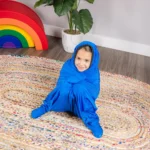
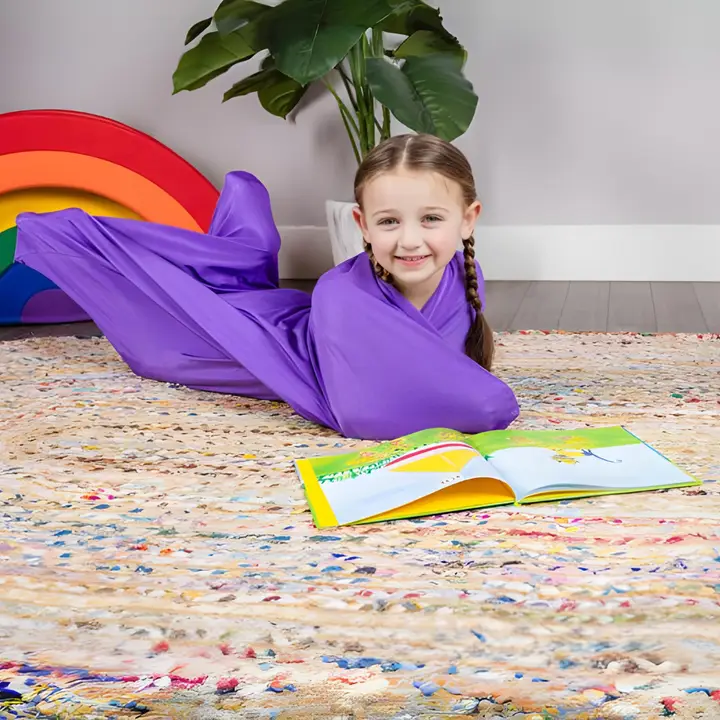
A body sock is similar to deep pressure input provided by a weighted blanket. It may help some people with sensory processing differences to calm and improve their concentration. However it may serve its purpose only to some individuals and comfort plays a larger role. A body sock may restrict a user’s movement and thus it may be suitable only to those users who do not feel threatened by its restrictiveness and are able to use it in a way that offers the required sensory input.
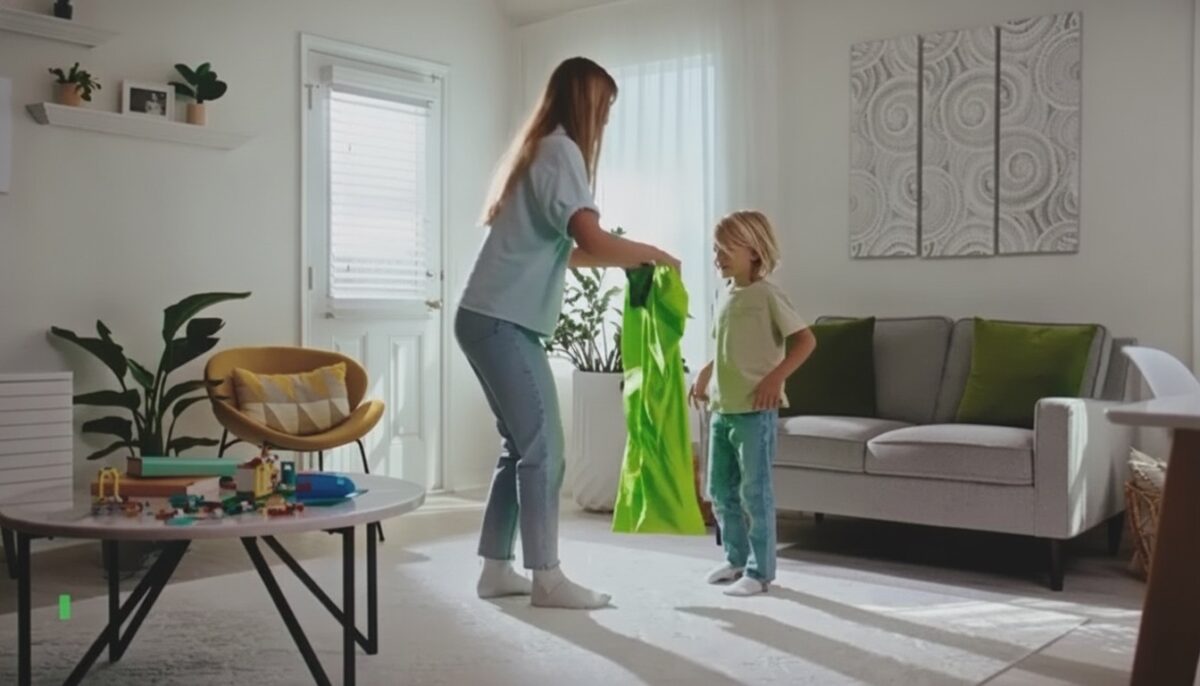
What to Consider
Using a body sock may provide sensory input in several ways. Individuals who enjoy body socks may use it for different reasons including sensory play and stimulation.
How does Body Sock work?
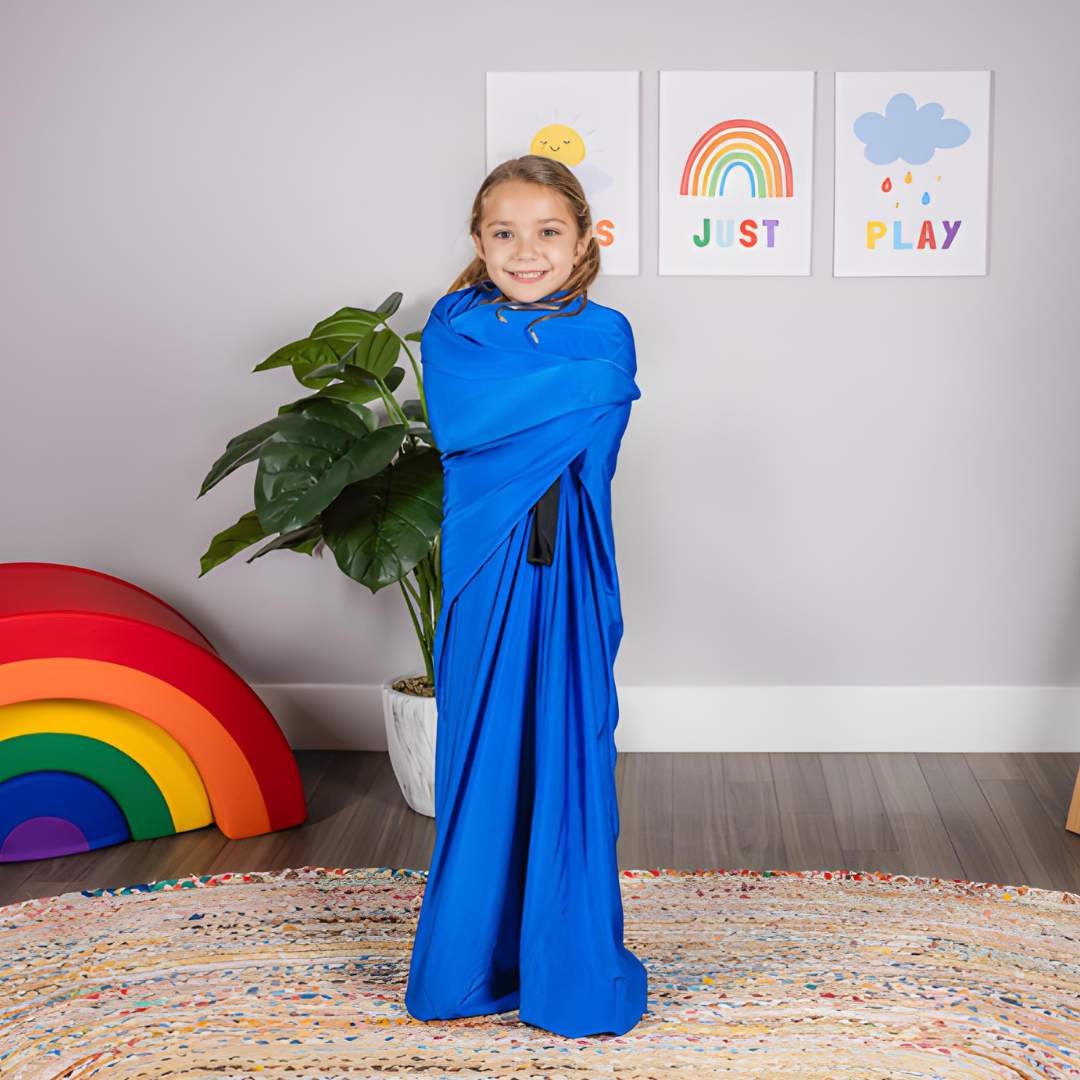
A body sock is made of stretchy fabric and therefore provides input through movement as the user stretches or pushes against it. Body socks are similar to weighted vests or blankets as all these products apply deep pressure to the body and offer sensory input.
Information from the body’s proprioceptive and vestibular systems tell you information about body position and movement respectively. Users may experience both types of input when a body socket changes position. However the type of input a user may experience and how they experience it is dependent on the position and the individual.
Body socks selected for women and for men are based on fit and comfort and not on any differences in sensory components. Users of body socks (regardless of the designated gender) may examine the same information including the kind and amount of stretch in the fabric and the overall fit.
Expect equal sensory components when examining body socks designated for either gender and choose based on personal fit and comfort.
A body sock does not restrict or control a user’s movement. A wearer may experience offered resistance when using his or her strength to stretch push or turn. Offered resistance may affect a user’s experience especially if the goal is to engage in free movement. Unlike other devices a body sock does not lock a user in place.
A body sock offers resistance to movement.
What Wearers Report
Some feel organizing to wear the weighted vest. Others like to move in the vest and find it provides active input. A body sock may help a user integrate a sensory activity into his self-regulation strategy. The effectiveness of a body sock is individualized and can not be predicted.
Gentle Pressure
Some users report gentle pressure is settling and calming. Wearing the vest may not always be preferred. A user may engage in the activity to provide himself with gentle deep pressure. Wearing the vest may not always be pleasant. Autism and ADHD are two diagnoses and may not always predict if a user will be receptive to deep pressure. Sensory activities like a body sock may be useful to give a user with autism and/or ADHD a focus activity. It is the user’s responsibility to determine if the user remains engaged and willing to participate. The activity should not always be implemented as a strategy to improve a user’s focus.
Resistance and Body Awareness
Resistance (via walls aids or other people) can make movement more intentional and conscious and awareness of body position may increase. This can also be called “heavy work” because of the physical effort needed. Resistance training of this type can also assist in developing fine motor skills.
Below are possible activities related to sensory goals:
- Sensory Goal Wearer Activity Possible Input
- Settling
- Push/Stretch against resistance
- Body Awareness
- Move body against fabric
- Proprioception
- Practice balance
- Vestibular Input
Activity is initiated by wearer not by adult. Outcome of activity is not as important as wearer’s response. Is activity beneficial to wearer? Is it something the wearer wants to do? Activities that wearer responds to positively are good to repeat.
Sizing Kids/Teens
Age is not as good of an indicator of size as a shoulder to floor measurement. For a sensory sock for a kid or teen use a measurement of shoulder to floor in inches and refer to manufacturer size chart. Choose size based on measurement and range indicated not age.
This information uses consistent standards when evaluating differently constructed products. When selecting sensory socks for children pick the size that matches the child’s information and falls within the range given by the manufacturer. Likewise when selecting sensory socks for older children and teens pick the size that corresponds with the teens’ information. Although a sensory sock may be labeled for children it doesn’t necessarily mean that a teen would not also benefit from wearing the sock.
Measure the Wearer’s Height
Have the wearer stand and measure from the top of the shoulder to the bottom of the leg. Record the measurement in inches. Use the same points of reference when comparing to a product size chart. If there is any inconsistency when interpreting the size chart consult the manufacturer.
When selecting a size do the following:
- Using inches measure the wearer’s shoulder to floor.
- Compare the measurement to the size chart.
- Identify the age group and size range.
- Rely on your judgment regarding the wearer’s mobility and the potential fit.
- Match the Age Group and Size Range
Although noting the wearer’s age may provide a general size range it doesn’t eliminate the need to measure the wearer’s shoulder to floor. Caregivers frequently misjudge the size of sensory products for children based on the child’s age. For example a caregiver may purchase a product for a child who is age-range tall or a caregiver may purchase a product for a child who is age-range short but is actually teen. Considering the planned movement of the wearer the size may be appropriate.
Different activities require different movements. For example turning requires more range of motion than just standing. While a product may fit in the range given it may not be appropriate for the activity. If the wearer is between sizes check which size is in the range.
Safety Checks for Use at Home
When using sensory products for the first time keep a close watch to check if the wearer is comfortable and able to easily remove the product. It is better to check for discomfort and potential problems rather than assuming the product is safe and appropriate to use.
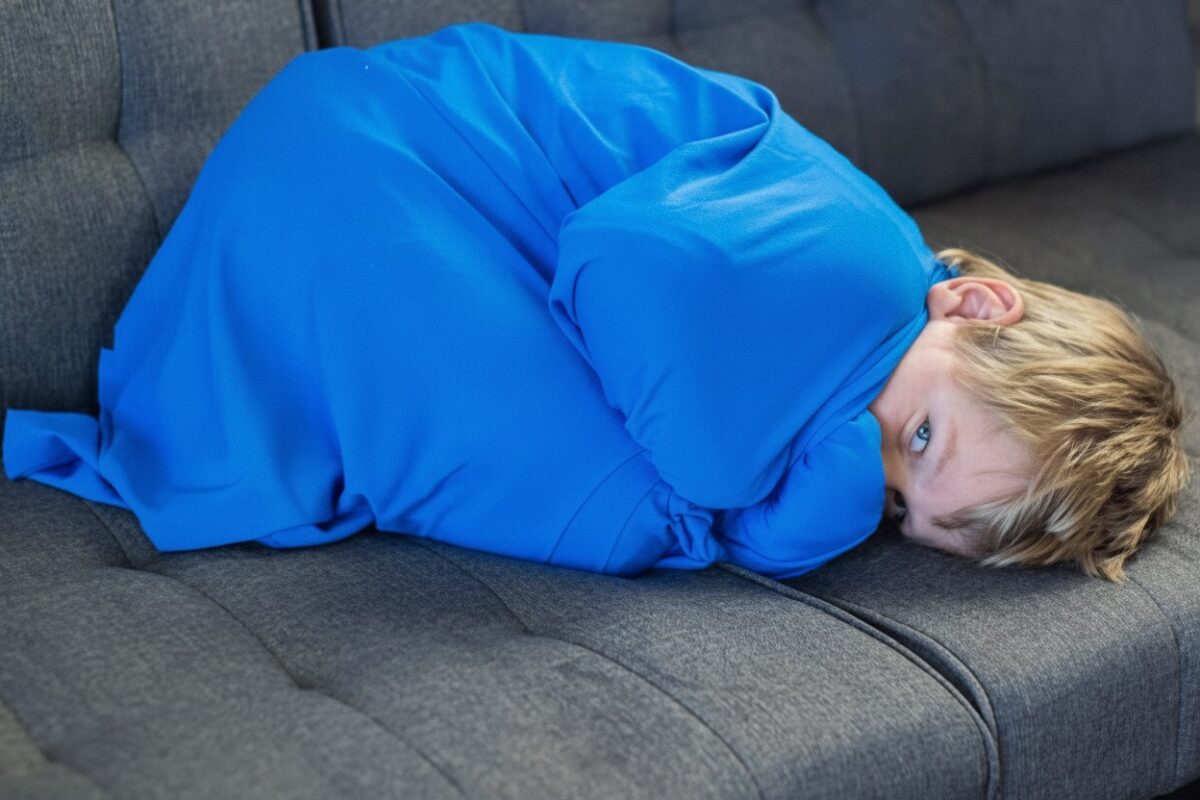
Supervise and Maintain an Easy Exit
The product must not obstruct comfortable breathing or movement. If the wearer is uncomfortable or distressed product use must be discontinued. While product use must not be restricted to prevent the wearer from leaving the wearer must be able to leave at any time.
Prior to each use check:
- Is product use under my direct supervision?
- Can the wearer comfortably breathe?
- Can the wearer comfortably move and remove the product?
Has a hard level dry surface been selected for use?
If the product creates an obvious risk and creates uncertainty or if the wearer is uncomfortable product use must be discontinued. Sensory products may create a slip risk. Clearing a slip risk depends on selecting a surface that is dry and level.
Don’t let the user wear the sock on hard smooth slippery surfaces. Avoid using the sock in areas where the user might pull or snag the fabric. The sock is to be used in areas that are open and where the user can move about freely. The sock is not to be used to help a user traverse through the house.
Pulling or freezing may mean that the user does not like the sensation and should be stopped. If the user is distressed or appears to be unable to remove the sock on his/her/their own it should be removed.
What Should Adults Consider Before Choosing A Sensory Sock?
Adults can determine if a sensory sock is appropriate based on if it fits and allows the appropriate range of movement. Socks are not to be differentiated based on the gender of the user. A sensory sock is appropriate for adults of any gender.
Body Socks For Adults are not to be generalized based on body shape and size. Consider what the user plans to do while wearing the body sock. Also consider if the manufacturer states that a particular size is appropriate for a specific use.
When selecting a body sock for an adult determine for yourself if the product is appropriate based on your planned use and movement. Compare the body sock with other products that may serve the same function and provide medical assistance.
Advertising must not mislead. Truth-in-advertising principles require that representations in advertising be truthful and not mislead consumers. There is no rule that requires a product description to serve as a recommendation.
Read the Product Description Carefully
While a description may include certain details concerning a product a description alone will not automatically generate a recommendation.
The word “compression” in and of itself does not confer a medical benefit. A label on a product cannot and does not guarantee that a product is appropriate for a consumer to use for a medical condition. If a product is to be used for a medical condition a prescription may be needed. Product descriptions cannot ensure a product is appropriate for a consumer to use for a medical condition.
The following is a listing of details that may be included for a product along with conclusions that cannot be drawn based on the included details:
- Details
- Conclusions
- Size range
- Personal fit
- Outcome of therapy
- Fabric details
- Effectiveness of therapy
- Use of the term “compression” in a product description
- Description of a product
- Medical benefit
- Treatment value
- Conclusion
Though Marketed as a solution for body sock refusal it is more appropriately viewed as an optional sensory activity. Body socks provide deep-pressure stimulation however the sensation may be unpleasant for some. It is recommended to evaluate the individual’s reaction to the activity rather than anticipate the outcome. Body socks may also provide vestibular stimulation as they allow for movement. Use of a body sock should only be performed after consultation with an occupational therapist. The sensory activity should not be initiated unless the individual is comfortable with it and the body sock is the correct size.\
Frequently Asked Questions
How long should the first body sock activity be?
The first body sock activity should be very short and turnedistanding if the individual signals discomfort. The activity should not be a game of endurance. The wearer should be allowed to stop the activity at any time. It is more important the individual is comfortable than that the activity lasts a certain long.
Can a body sock be worn while sleeping?
A body sock should not be worn while sleeping. A body sock is to be used only while under supervision. Bedtime wear should not be used for sensory activities.
Can body socks be used instead of occupational therapy?
Body socks can’t be used instead of occupational therapy or evaluations. Body socks can’t determine the reason for a person’s problem or provide a solution. Body socks can help as one of many activities in a plan developed by a therapist. Only a therapist can determine if a body sock should be part of a plan to help a person achieve a goal.
How should body socks be washed?
Always follow the instructions on the body sock. Stretch fabrics can be difficult to care for and the care label can help. Not all fabrics can be washed and dried the same way. Assuming this is the case can cause damage to the body sock.
Can a person who doesn’t like being in enclosed spaces wear a body sock?
A person who does not like enclosed spaces can be offered the opportunity to wear a body sock. If the person wants to leave the body sock at any time he or she should be allowed to do so. If the body sock wearer shows signs of anxiety or discomfort he or she should be helped to remove it. Other activities should be offered if the body sock wearer does not like the feeling of being enclosed.